


SolarGard Panorama Window Film: The Premium Choice for Homes and Businesses in Jacksonville
Updated: Jun 25

When people think about window tint at home or in office, they often think about darker glass. It used to be that way but tint technology has since improved. High-end architectural window film is breaking the stigma.
US tint manufacturers are always trying to create a film that gives the right balance of heat rejection, glare control, UV protection, privacy, appearance, and clarity for your windows. This is where SolarGard Panorama stands out. Most homeowners and business owners we work with around Jacksonville want their windows to be better. They want cooler rooms, offices that are easier to work in, polished storefronts, and interior protection without ruining the natural light. SolarGard Panorama is one of the best premium architectural window film options for those who want it all. It is a high-performance tint that performs over time in aesthetics and productivity.
What Is SolarGard Panorama Window Film?
SolarGard Panorama is a premium architectural window film line designed for residential and commercial glass. These films are built to reduce solar heat, control glare, block damaging UV rays, and improve comfort while preserving the view and appearance of the glass.
The key difference between Panorama and many standard window films is balance.
A lot of films that use outdated technology or have to use other means to be effective are either quite dark or too reflective, making the room feel closed-in and gives it a mirror-like appearance. Other films might allow natural light in to the room but do not reject enough heat to make a difference. Especially in a hot climate like Jacksonville, FL.
We like to offer 2 versions of Panorama: Panorama Hilite and Panorama Slate. Hilite is the cleaner, brighter, low-reflective option. Slate offers stronger heat, glare control, and privacy. Both are top-shelf and will be one of the most balanced films available in terms of clarity and performance.
Why Architectural Window Film Quality Is About More Than Darkness
As we’ve mentioned before, darker doesn’t mean better anymore. The most important numbers are VLT (visible light transmission), TSER (total solar energy rejected), visible reflectance, UV rejection, and glare reduction.
VLT tells you the percentage of light that passes through the material. So a higher number means more light passes through and so it indicates a clearer film that looks lighter and lets more natural light in through the window.
TSER tells us how much the material rejects total solar energy. Higher TSER means better or stronger heat control.
Visible light reflectance speaks to the reflectivity of the material. A higher number will have a mirror-like finish and a lower number means less reflectivity and therefore more closely matches an actual window. UV rejection tells us how much ultraviolet light the material blocks. This is important for fading furniture, damage to leather, flooring, artwork, and other interior finishes and objects. The higher the UV rejection the better for interior protection.Panorama is an incredibly strong option, if not the option because it balances these numbers together to pack the biggest punch possible.
Panorama Hilite: Clearer Glass Feel With Real Heat Rejection
Panorama Hilite is the best fit when you want strong performance without making the glass look heavily tinted. Even so, Hilite comes in many different shades but we’ll discuss the lightest shade here.
This is the one we would often recommend for living rooms, kitchens, bedrooms, home offices, storefronts, showrooms, offices, and customer-facing glass where natural light is the focus.

Hilite 70 is especially useful because it keeps the glass bright while still delivering real solar performance. It allows 70% visible light transmission, has only 8% interior and exterior visible reflectance, rejects 54% of total solar energy, and blocks more than 99% of UV rays when applied to 1/4-inch single clear glass. The results get better if you have a thicker glass.
In plain English, that means Hilite 70 lets a lot of daylight through while still helping reduce heat, UV exposure, and some of the glare and fading concerns that come with sun-facing glass.
That makes a difference in Jacksonville because many homes and businesses deal with strong sun for long stretches of the day. Customers often want relief from heat and glare, but they do not want the space to feel dark. Hilite is a great option for that problem.
Why Hilite Works So Well for Homes
For residential window tinting, Hilite is ideal when appearance is high on the list but you also want to make a difference to your interior.
Many homeowners do not want their windows to look obviously tinted. They want to keep their view, keep their rooms bright, and avoid a reflective or overly dark finish. Hilite gives those customers a premium option that still helps with comfort.
It is especially useful for living rooms with large windows, sun-facing bedrooms, home offices, kitchens and breakfast areas, rooms with hardwood floors, artwork, rugs, or furniture, windows where curb appeal is considered.
Hilite is not the film we would recommend for every window. If privacy or heavy glare control is the main concern, Slate may be the stronger option. But when the customer wants comfort while keeping a clean, bright home environment, Hilite is one of the best choices in the Panorama line.
Why Hilite Works So Well for Businesses
Commercial glass often has a different problem. Professional aesthetics is important, especially on a shop front where customers need to see inside.
A storefront cannot always be too dark. A showroom may need clear visibility. An office may need daylight to keep the space pleasant. A restaurant may want guests to enjoy the room without feeling like the windows have been covered up.
Hilite works well in those spaces because it helps reduce solar heat while keeping the glass clean and natural-looking.
It is a strong option for retail storefronts, restaurants, offices, showrooms, reception areas, waiting rooms, medical offices, customer-facing glass, and conference rooms where daylight is needed inside.

Panorama Slate: Stronger Heat, Glare, and Privacy Control
Panorama Slate is the better choice when the window needs stronger solar control.
Slate is a dual-reflective film, which means it is built to provide stronger heat rejection and privacy from people the outside while maintaining a more usable view from the inside. It is a better fit for customers who are dealing with intense sun, strong glare, privacy concerns, or windows that make a room uncomfortable during the hottest parts of the day. We’ll use Slate 40 in this example, which is the lightest Slate option.

Slate 40 on ¼ inch single clear glass provides 44% VLT, 53% TSER. Interior reflectance is 12% and on the exterior it’s a little higher at 18% for that privacy. 99% UV protection to protect everything inside the room from sun damage.
That makes Slate a powerful option for glass that gets hit hard by the Florida sun. These numbers seem higher, but don’t forget that it is still very optically clear compared to other leading tint.
Why Slate Works So Well for Homes
Slate is useful when a homeowner wants more noticeable protection.
Some rooms do not just need a little help. They get hot, bright, and uncomfortable. They may face direct afternoon sun. They may have large glass doors, tall windows, or exposed windows facing the street or beachfront. In those cases, a clearer film may not be enough.
Slate is often a better match for sunrooms, street-facing windows, large glass doors, bedrooms needing more daytime privacy, rooms with heavy afternoon sun, TV rooms with glare issues, windows near pools or patios, and areas where heat rejection matters more than maximum brightness.
The tradeoff is simple. Slate will look slightly more tinted than Hilite, but it gives stronger heat, glare, and privacy control. That makes it the better choice when comfort and solar control are the priority.

Why Slate Works So Well for Commercial Buildings
For commercial window tinting, Slate is often the more practical solution when the glass is exposed, oversized, or creating a serious comfort issue.
Businesses in Jacksonville often have large storefronts, office windows, waiting rooms, glass doors, and sun-facing work areas. Without the right film, these spaces can become uncomfortable quickly. Staff may deal with glare on screens, customers may avoid hot seating areas, and products or interior finishes may be exposed to UV damage for hours each day.
Slate is a strong option for storefronts needing daytime privacy, offices with glare on monitors, waiting rooms with direct sun, restaurants with hot window seating, gyms with large exposed glass, clinics and professional offices, schools and public-facing buildings, and commercial glass that needs a stronger tint effect.
Slate gives these spaces a more controlled, polished, and comfortable feel. It can also help the building look more finished from the outside.
Hilite vs Slate: Which Panorama Film Is Better?
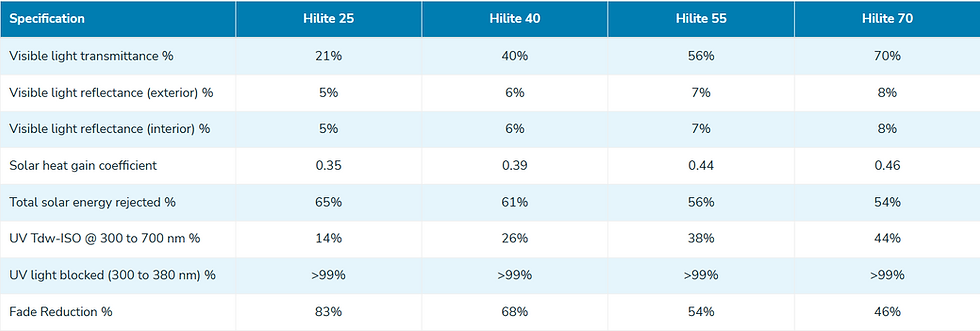

The best option depends on what you want the room to feel like. We have included a table above showing the different shades of each and their performance and we will outline the main differences below.
Choose Panorama Hilite if the priority is keeping the room bright, preserving natural light, maintaining a cleaner glass appearance, reducing heat without a dark tint look, keeping storefronts and customer-facing glass more open, and using a premium low-reflective film. This is the option if you want tint without the tint.
Choose Panorama Slate if the priority is stronger heat rejection, more glare control, more daytime privacy, a slightly noticeable tint appearance, better control for sun-facing windows, or commercial glass that needs a stronger solar-control finish. Don’t forget that Panorama is the top-shelf option so even Slate is barely noticeable.
The best result often comes from matching different films to different areas of the property. A home may use Hilite on living room windows and Slate on a sun-facing bedroom. A business may use Hilite on a storefront and Slate on office windows where sun and glare bother workstations.
Your local Panorama dealer will know the products very well and will be able to help you pick and choose the very best option for your expectations.
How Panorama Compares With Other Premium Architectural Films
There are many high-quality architectural films on the market. Some focus on ceramic technology. Some focus on reflectivity. Some are designed for clear glass. Others are made for privacy, glare, and heavy solar control.
The reason Panorama is such a strong premium choice is that it does not depend on only one selling point.
Many standard neutral films can reduce glare and make glass look darker, but they may not deliver the same level of heat rejection in lighter shades.
Many reflective films can reject strong heat, but they may create a shiny or mirrored look that is not right for every home, office, or storefront.
Many clear or low-reflective films preserve light, but some do not reject enough heat to satisfy customers in a hot climate.
Panorama gives Tint Magic a more complete premium range. Hilite covers the customer who wants clarity and comfort. Slate covers the customer who wants stronger heat, glare, and privacy control. Together, they allow us to recommend the right product based on the building instead of forcing one type of tint into every situation.
That is the difference between simply tinting glass and choosing a premium architectural window film system.
Why Warranty Support is Important to Consider
A premium window film should not only perform well on day one. It should be backed by a serious warranty structure and installed properly.
SolarGard’s Panorama warranty documents include coverage against issues such as adhesive failure, bubbling, cracking or crazing, delamination, demetallization, peeling, manufacturer defects, and excessive or unusual color change, subject to the specific warranty terms and proper installation requirements.
Depending on the warranty program, product, glass type, and application, Panorama solar films may include lifetime limited residential coverage and long-term commercial coverage. Certain warranty programs also include additional glass-related coverage when the product is installed as an approved film-to-glass application and the warranty conditions are met.
This is important because architectural film is not something you want installed casually. The product, glass type, installer, and application all factor in. A professional installer should help assess which film makes sense for the specific window system and the customer’s goals.
Warranty coverage is always subject to SolarGard’s current written warranty terms, product eligibility, approved film-to-glass application, and proper installation requirements.
Is SolarGard Panorama Worth It?
For many homeowners and business owners, yes. SolarGard Panorama is worth considering when you want a high-performance window tint that lasts.
It is especially worth considering if you care about heat rejection, natural light, low reflectivity, a cleaner finished appearance, UV protection, glare control, daytime privacy, long-term performance, professional installation, and matching the right film to the right glass.
If the only goal is the cheapest possible tint, Panorama may not be the right fit. But if the goal is a premium architectural window film that looks better, performs better, and gives you more options, Panorama is one of the strongest choices available in the US.
FAQs
What makes SolarGard Panorama different from standard window film?
SolarGard Panorama is different from standard window film because it is built as a premium architectural film line rather than a basic dark tint. Standard films often focus mainly on making the glass darker or reducing glare. Panorama is designed to balance heat rejection, UV protection, visibility, reflectivity, comfort, and appearance. That matters because homeowners and business owners usually do not want to solve one problem while creating another. A room that is cooler but too dark may not feel right. A film that rejects heat but looks too reflective may not suit a home or storefront. Panorama gives customers more refined options through Hilite and Slate, so the film can be selected based on the glass, room use, sun exposure, and desired look.
Is Panorama Hilite better than darker window tint?
Panorama Hilite can be better than darker window tint when the goal is to reduce heat and UV exposure without making the glass look heavily tinted. Darker films can be useful, especially when privacy or glare control is the top priority, but they are not always the best choice for living rooms, offices, storefronts, or spaces where natural light matters. Hilite is designed for customers who want a cleaner, brighter appearance while still getting meaningful solar performance. Hilite 70, for example, allows a high level of visible light through the glass while still rejecting a significant amount of total solar energy and blocking more than 99% of UV rays. SolarGard’s performance sheet also lists Hilite 70 with 95% IR rejection, 20% glare reduction, and 45% fade reduction on 1/8-inch single-pane clear glass. For many homes and businesses, that balance is more useful than simply choosing the darkest film available.
Is Panorama Slate good for privacy?
Yes, Panorama Slate is a strong option when daytime privacy is one of the main goals. Slate is a dual-reflective film, which means it is designed to create more privacy from the outside while maintaining a more usable view from the inside. This can make it a smart choice for street-facing home windows, storefronts, offices, clinics, waiting rooms, and other spaces where people want more comfort and separation from outside visibility. It is important to understand that window film privacy depends on lighting conditions. During the day, when it is brighter outside than inside, Slate can help increase privacy. At night, when interior lights are on, privacy can be reduced, so blinds or shades may still be needed for full nighttime privacy.
Which SolarGard Panorama film is best for a home?
The best SolarGard Panorama film for a home depends on what the homeowner wants to fix. Panorama Hilite is usually the better choice for rooms where natural light and a cleaner glass appearance are important. It works well for living rooms, kitchens, bedrooms, and home offices where the goal is to reduce heat and UV exposure without making the room feel dark. Panorama Slate is usually better for rooms that need stronger heat rejection, glare reduction, or daytime privacy. That can include sunrooms, street-facing windows, large glass doors, and rooms that get direct afternoon sun. In many homes, the best solution is not one film for every window. It is a mix based on each room’s exposure, comfort needs, and appearance goals.
Is SolarGard Panorama good for storefronts and commercial buildings?
Yes, SolarGard Panorama can be an excellent option for storefronts and commercial buildings because it gives business owners both performance and appearance options. A storefront often needs to stay visible and inviting, so Panorama Hilite may be a better fit when the goal is to reduce heat while keeping the glass bright and natural-looking. Offices, waiting rooms, restaurants, gyms, and other commercial spaces may need stronger glare control, privacy, or heat rejection, which is where Panorama Slate can be a stronger option. Commercial window tinting is not only about reducing heat. It also affects customer comfort, employee productivity, merchandise protection, curb appeal, and how professional the building looks from the outside.


Comments